


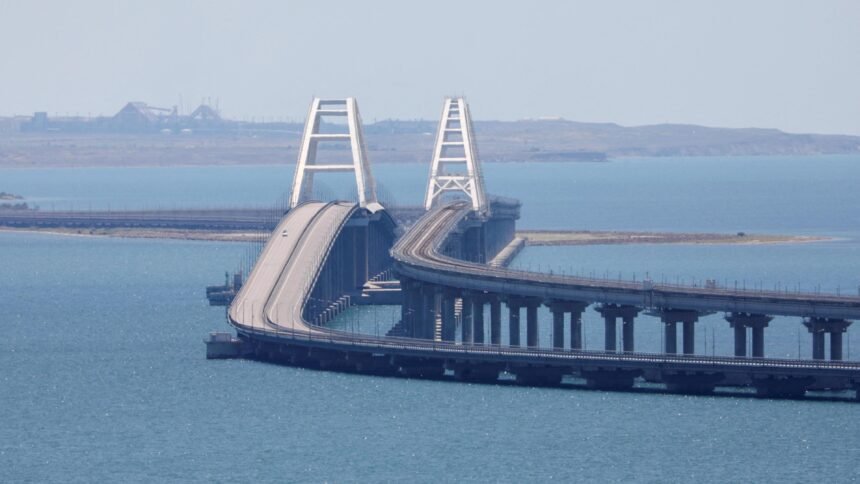
The Crimean Bridge is one of the most significant infrastructure projects connecting mainland Russia with the Crimean Peninsula. Stretching across the Kerch Strait, this enormous road and railway crossing has become much more than a transportation route. It represents political ambition, military strategy, economic importance, and one of the most sensitive points in the ongoing Russia-Ukraine conflict.
Since opening in 2018, the bridge has attracted international attention because of its construction, strategic location, and repeated attacks during the war. Its importance has increased further as both Russia and Ukraine have focused on transport infrastructure as part of their military strategies.
Understanding the Crimean Bridge requires looking beyond its impressive engineering. Its history is closely connected to the political situation surrounding Crimea, the security of the Black Sea region, and the wider consequences of Russia’s invasion of Ukraine.
What Is the Crimean Bridge?
The Crimean Bridge, also known as the Kerch Bridge, is a combined road and railway structure crossing the Kerch Strait. It connects Russia’s Krasnodar region with the Crimean Peninsula, which Russia occupied and annexed in 2014.
The crossing is approximately 19 kilometres long, making it one of the largest bridge projects in Europe. Its road and railway sections allow vehicles, passenger trains, and freight trains to travel between mainland Russia and Crimea.
Before its construction, transportation between the two territories depended heavily on ferry services and air connections. These options could be affected by weather conditions, seasonal demand, and transportation restrictions.
The bridge created a permanent land connection, significantly changing the movement of people and goods across the region.
However, its location and political background have made it a controversial structure. Ukraine and many countries consider Crimea Ukrainian territory under Russian occupation, while Moscow claims the peninsula as part of Russia.
History Behind Its Construction
The idea of building a bridge across the Kerch Strait existed long before the current structure was developed. Different proposals had been discussed over several decades because the narrow waterway was an important transportation connection between the Black Sea and the Sea of Azov.
The political situation changed dramatically in 2014 when Russia took control of Crimea and subsequently annexed the peninsula. Following these events, Moscow accelerated plans for a permanent connection between Russian territory and Crimea.
Construction began in 2016, involving thousands of engineers, construction workers, and specialists. The project required substantial technical planning because of the challenging geographical and environmental conditions in the Kerch Strait.
The road section officially opened in May 2018. Russian President Vladimir Putin attended the opening ceremony and drove a construction truck across the newly completed crossing.
Railway operations began later. Passenger railway services started in December 2019, providing another transportation option between Crimea and mainland Russia.
Engineering and Design
The Crimean Bridge is an ambitious engineering project because of the conditions surrounding its construction. The Kerch Strait experiences changing weather, strong currents, seismic activity, and seasonal ice movements.
Engineers needed to design foundations and supporting structures capable of handling significant environmental pressure while supporting regular road and railway traffic.
The bridge consists of separate road and railway sections. Its construction includes multiple spans supported by reinforced concrete and steel structures.
The road section accommodates vehicle traffic, while the railway section provides a route for passenger and freight trains.
One of the project’s most important engineering challenges was establishing a reliable crossing without completely obstructing maritime movement through the strait. Nevertheless, the bridge’s height and design have generated concerns about restrictions on certain commercial vessels entering the Sea of Azov.
Its construction demonstrated considerable engineering capacity, but the surrounding political and environmental questions remain important parts of the project’s history.
Why Is the Bridge So Important?
The importance of the Crimean Bridge extends beyond ordinary transportation. It has become a major connection for civilian supplies, commercial activity, and Russian military logistics.
For residents and businesses in Crimea, the crossing provides a direct route to mainland Russia. Food, construction materials, fuel, and other goods can be transported through its road and railway systems.
The railway connection is particularly important for moving large quantities of freight. It offers an alternative to road transportation and helps maintain supply connections across the peninsula.
From a military perspective, the bridge has also served as an important logistical route for Russian forces operating in southern Ukraine. Its strategic value makes it a significant target during the conflict.
This combination of civilian and military functions explains why developments involving the bridge receive considerable international attention.
The Bridge During the Russia-Ukraine War
Russia’s full-scale invasion of Ukraine in February 2022 dramatically increased the bridge’s strategic significance.
Because it connects Russia directly with occupied Crimea, the crossing became an important route for transporting supplies and supporting Russian military operations.
Ukraine has repeatedly targeted the structure or attempted to disrupt its operations. These incidents have demonstrated how vulnerable major transportation infrastructure can become during modern warfare.
The October 2022 Explosion
One of the most significant incidents occurred on October 8, 2022, when an explosion damaged part of the bridge.
The incident involved a truck bomb and caused serious damage to the road section. Several vehicles were affected, railway operations were disrupted, and four people were killed.
The explosion created major transportation difficulties and required extensive repair work. Although traffic gradually resumed, the incident demonstrated the bridge’s vulnerability and its importance to Russia’s regional supply network.
The July 2023 Attack
Another major incident occurred on July 17, 2023. Explosions damaged the bridge’s road section, resulting in the collapse of part of the crossing.
Two civilians were killed, and another person was injured. Traffic was temporarily suspended while authorities inspected the damage and organised repairs.
The incident again highlighted the bridge’s importance as both a transportation connection and a strategic military asset.
Recent Developments in November 2026
The Crimean Bridge has remained an important focus of the conflict in 2026. On November 16, Ukrainian drones reportedly struck the crossing, prompting Russian authorities to suspend road traffic temporarily.
According to Reuters, the bridge remained closed for approximately 17 hours before one road lane reopened. Russian officials described the initial damage as minor, while railway services continued operating normally.
The situation developed further on November 17, when Russia reported another attack on the crossing. Russian authorities said traffic had been suspended again, and Crimea’s Russian-installed governor reported that two people had been killed on the peninsula.
The full extent of the latest damage was not immediately established, and Ukraine had not publicly commented on the reported strike at the time of the initial reports.
These developments demonstrate how quickly the operational situation around the bridge can change. They also reinforce its continuing importance to the wider military and political situation in the Black Sea region.
Political and International Significance
The bridge is not simply a transportation project. Its construction is closely connected to the international dispute over Crimea.
Ukraine considers the peninsula part of its sovereign territory and rejects Russia’s annexation. Most countries continue to recognise Crimea as part of Ukraine under international law.
Russia, meanwhile, presents the bridge as an important domestic infrastructure connection.
The project has also raised questions about maritime navigation. The Kerch Strait provides access between the Black Sea and the Sea of Azov, making it important for regional shipping and international trade.
European institutions have previously criticised the construction and raised concerns about its effects on Ukrainian sovereignty and maritime access.
In April 2026, an arbitral tribunal issued an award in a separate maritime dispute between Ukraine and Russia. The decision addressed the legal status of maritime areas in the Black Sea, Sea of Azov, and Kerch Strait, confirming their status as internal waters of two states rather than a Russian-only maritime area.
These legal questions demonstrate that the bridge’s significance extends well beyond engineering and transportation.
What Could the Future Hold?
The future of the bridge will depend heavily on the military and political situation surrounding Crimea.
Security arrangements, structural inspections, transportation restrictions, and repair operations are likely to remain important considerations.
Repeated attacks have also demonstrated that even large infrastructure projects can face serious operational challenges during wartime.
For civilians, reliable transportation remains essential. Disruptions can affect travel arrangements, commercial deliveries, and the availability of certain goods.
For governments and military planners, the crossing will continue to be viewed through the wider strategic importance of Crimea and the Black Sea.
Its long-term role will therefore depend not only on engineering and maintenance but also on developments in the regional conflict.
Frequently Asked Questions
Where Is the Crimean Bridge Located?
The bridge crosses the Kerch Strait, connecting Russia’s Krasnodar region with the Crimean Peninsula. It provides a direct road and railway connection between the two territories.
How Long Is the Crimean Bridge?
The structure is approximately 19 kilometres long, making it one of the largest bridge crossings in Europe.
When Was the Bridge Opened?
The road section opened in May 2018. Passenger railway services began in December 2019, completing another major part of the transportation connection.
Why Is the Bridge Strategically Important?
It supports civilian transportation, commercial deliveries, and railway freight movement. It has also served as an important supply route for Russian military forces operating in southern Ukraine.
Has the Bridge Been Attacked?
Yes. Major incidents occurred in October 2022 and July 2023, causing damage and temporary transportation disruptions. Further reported attacks took place in 2025 and November 2026.
Is the Crimean Bridge Currently Open?
Its operating status can change because of security incidents and repair work. Following the reported attacks on November 16 and 17, 2026, Russian authorities announced further traffic suspensions. Travellers should rely on the latest official transportation announcements rather than assume normal operations.
Conclusion
The Crimean Bridge is one of the most politically and strategically significant infrastructure projects associated with the Russia-Ukraine conflict. Its 19-kilometre crossing has transformed transportation between mainland Russia and Crimea while becoming an important symbol of the competing political claims surrounding the peninsula.
From its ambitious construction and engineering challenges to the attacks that have disrupted its operations, the bridge has remained at the centre of international attention.
Its future will depend on security conditions, regional politics, and the continuing conflict. More than an ordinary road and railway connection, it represents the complicated relationship between infrastructure, national sovereignty, military strategy, and international stability.