


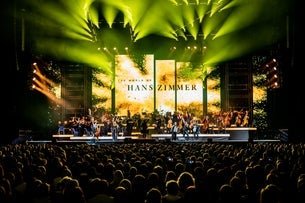
Hans Zimmer is a name synonymous with cinematic brilliance. His compositions have defined modern film scoring, creating unforgettable musical landscapes that elevate stories to new heights. The world of Hans Zimmer is vast, intricate, and deeply influential, reflecting a career that spans decades and encompasses countless genres and collaborations. In this article, we will explore his journey, his creative process, and the impact of his music on both audiences and the industry.
Early Life and Musical Beginnings
Born in Frankfurt, Germany, in 1957, Hans Zimmer displayed musical talent from a young age. He initially trained in piano and electronic music, demonstrating an early interest in blending traditional instruments with emerging technology. Zimmer’s early exposure to various musical genres, from classical to rock, would later inform his eclectic and innovative approach to film scoring.
His career began in the 1970s, working with pop artists and composing for small projects. However, it was his work in film that truly allowed Zimmer to showcase his ingenuity. By combining classical sensibilities with electronic experimentation, he carved a niche that revolutionized the way film music could function.
Rise to Hollywood Prominence
The breakthrough for Hans Zimmer came in the late 1980s and early 1990s. His score for the film Rain Man (1988) garnered attention, but it was The Lion King (1994) that cemented his reputation as a master composer. Winning an Academy Award for this score, Zimmer proved his ability to create music that resonates emotionally with global audiences.
Zimmer’s signature style blends orchestral elements with digital soundscapes, often layering complex rhythms and motifs to create tension, drama, and profound emotional impact. This approach has influenced a generation of composers, setting new standards for both blockbuster and indie film scoring.
The World of Hans Zimmer: Signature Techniques
The world of Hans Zimmer is characterized by several recurring techniques that make his music instantly recognizable. One hallmark is his use of powerful, thematic motifs that develop over the course of a film, allowing the score to mirror the narrative journey. Zimmer often experiments with unconventional instruments and sounds, integrating synthesizers, ethnic instruments, and innovative percussion to create textures that feel both modern and timeless.
Collaboration is another key aspect of Zimmer’s process. He frequently works with other composers, musicians, and filmmakers to ensure the music is fully integrated with the visual storytelling. His partnerships with directors like Christopher Nolan and Ridley Scott have resulted in some of the most memorable film scores in cinematic history.
Impact on Modern Cinema
Hans Zimmer’s influence on contemporary cinema cannot be overstated. Films such as Inception (2010), Interstellar (2014), and Dune (2021) showcase his ability to amplify storytelling through music. In each, Zimmer’s compositions heighten the emotional stakes, drawing audiences deeper into the narrative world. His innovative techniques, such as the use of time-stretched sounds in Interstellar or the haunting vocals in Gladiator, have expanded the possibilities of film music.
Beyond individual films, Zimmer’s work has reshaped audience expectations. Modern viewers often anticipate a cinematic score that is immersive, dynamic, and integral to the story—a standard largely popularized by Zimmer and his contemporaries.
Zimmer’s Creative Philosophy
At the core of the world of Hans Zimmer is a philosophy centered on emotional storytelling. He views music as a narrative tool rather than a decorative element, focusing on how each note can deepen the audience’s connection to the characters and plot. Zimmer also embraces technology, believing that new tools can enhance, rather than replace, the expressive power of traditional composition.
His approach often involves experimentation and risk-taking. Zimmer is known for stepping outside conventional scoring methods, exploring unusual sound design, and blending genres to produce scores that are bold and original. This willingness to innovate has kept him at the forefront of the industry for decades.
Live Performances and Public Engagement
Beyond the recording studio, Hans Zimmer has brought his compositions to life in spectacular live performances. Tours featuring orchestras, choirs, and cutting-edge visual effects allow audiences to experience his music in a communal, immersive environment. These concerts not only showcase his talent but also educate fans about the complexity and depth of modern film scoring.
Zimmer’s engagement with aspiring musicians and the broader public underscores his commitment to fostering creativity. He frequently conducts workshops and talks, sharing insights into his process and inspiring the next generation of composers.
Legacy and Continuing Influence
The legacy of Hans Zimmer is evident in the countless composers who cite him as an inspiration. His pioneering integration of electronic and orchestral music has become a template for many modern scores, while his narrative-driven approach has influenced the way music is used in storytelling across media.
Moreover, Zimmer’s adaptability ensures that his impact remains relevant. From animated features to epic blockbusters, his scores continue to shape the auditory landscape of cinema, proving that the world of Hans Zimmer is both timeless and ever-evolving.
Conclusion
Exploring the world of Hans Zimmer is to delve into a realm where music and storytelling converge in profound and innovative ways. His ability to evoke emotion, create tension, and enhance narrative depth has cemented his status as one of the most influential composers of our time. Zimmer’s work is not just heard; it is experienced, leaving a lasting imprint on audiences and the industry alike.
FAQs About the World of Hans Zimmer
Who is Hans Zimmer? Hans Zimmer is a German composer renowned for his film scores, blending orchestral and electronic music to create iconic soundscapes for movies.
What are some of Hans Zimmer’s most famous scores? Some of his most acclaimed scores include The Lion King, Inception, Interstellar, Gladiator, and Dune.
How does Hans Zimmer create his music? Zimmer combines traditional orchestration with modern technology, experimenting with electronic instruments, unusual sounds, and thematic motifs that evolve throughout a film.
Has Hans Zimmer won major awards? Yes, Zimmer has won an Academy Award, multiple Golden Globes, Grammys, and numerous other awards for his contributions to film music.
What makes Hans Zimmer’s music unique? His music is distinguished by its emotional depth, innovative blending of electronic and classical elements, and narrative-driven composition that enhances the cinematic experience.