


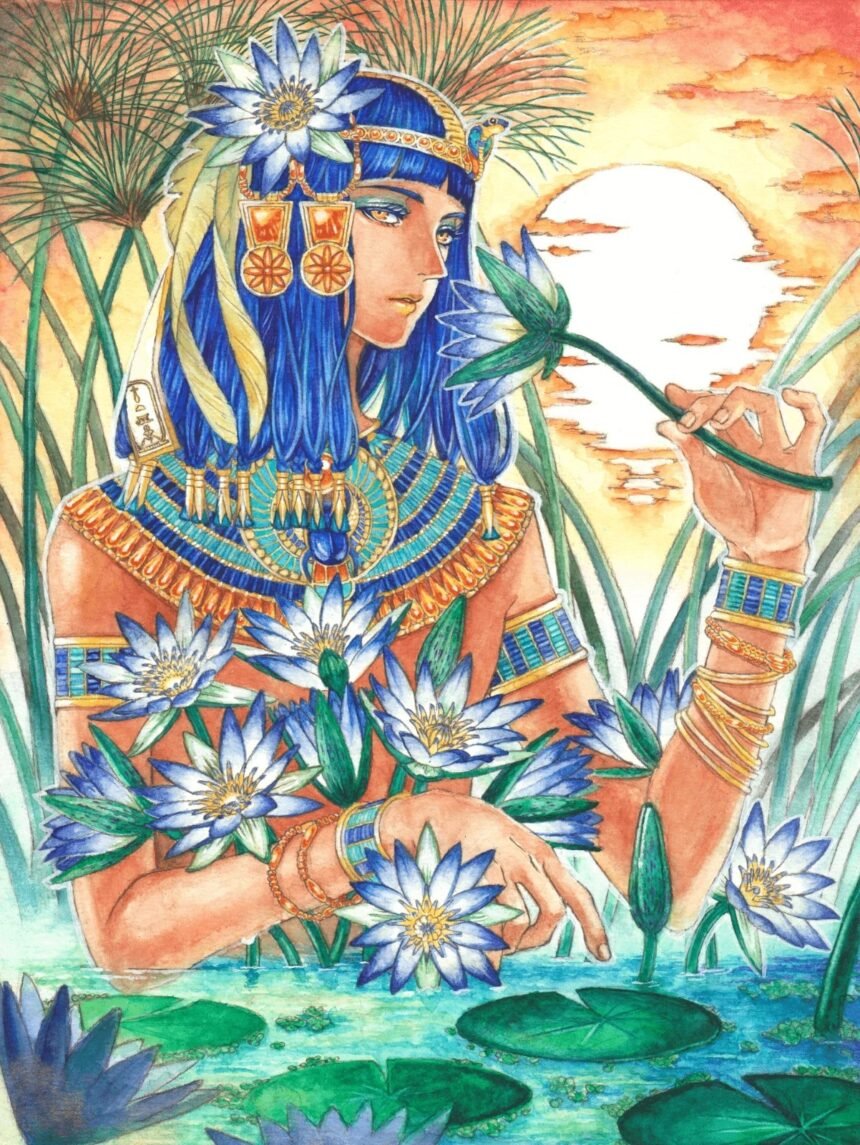
For thousands of years, the Egyptian blue lotus flowers have been a symbol of mystery, spirituality, and beauty in ancient Egyptian culture. Often depicted in hieroglyphs, temple art, and tomb decorations, this mesmerizing flower has captivated historians, botanists, and spiritual seekers alike. The blue lotus, known scientifically as Nymphaea caerulea, was not only admired for its striking appearance but also revered for its deep cultural and medicinal significance.
This article explores the history, symbolism, uses, and modern rediscovery of the Egyptian blue lotus, offering an in-depth look into one of the most sacred plants of the ancient world.
Origins and Historical Background
Discovery and Botanical Identity
The Egyptian blue lotus flowers belong to the Nymphaeaceae family, commonly referred to as water lilies. The scientific name, Nymphaea caerulea, reflects its enchanting blue hue—“caerulea” meaning “sky blue” in Latin. Native to the Nile River and other parts of East Africa, this aquatic plant thrives in still or slow-moving freshwater bodies such as ponds, lakes, and marshes.
What sets it apart from other water lilies is its vibrant blue petals that open in the morning with the rising sun and close again at dusk. This daily rhythm mirrored the Egyptian belief in rebirth and the cycles of life and death, a theme deeply woven into their religious and artistic expressions.
The Blue Lotus in Ancient Egyptian Civilization
In ancient Egypt, the blue lotus held sacred importance far beyond its visual appeal. It was a powerful symbol of creation, resurrection, and the sun’s daily journey. According to Egyptian mythology, the blue lotus emerged from the primordial waters of chaos—Nun—and from it was born the sun god Ra. This myth made the flower a representation of birth, light, and eternal renewal.
Art from the New Kingdom period (c. 1550–1070 BCE) frequently depicts pharaohs, deities, and nobles adorned with blue lotus garlands or holding the flowers in religious ceremonies. It was commonly featured in temple murals, tomb paintings, and funerary objects. The flower also appeared in the famous Book of the Dead, emphasizing its role in spiritual awakening and the afterlife.
Symbolism and Spiritual Significance
Symbol of Rebirth and Enlightenment
The Egyptian blue lotus flowers were more than ornamental; they symbolized the human soul’s journey from darkness to enlightenment. The flower’s unique behavior—opening with the sunrise and closing at sunset—mirrored the sun god’s daily rebirth, embodying the concept of life emerging from death.
In Egyptian art, the blue lotus is often seen in scenes depicting transformation, resurrection, or divine revelation. Priests and initiates used it as a spiritual aid during meditation and rituals to promote higher consciousness and inner peace.
Connection to the Sun and Cosmic Energy
The blue lotus was closely associated with solar deities such as Ra and Horus. It was believed that inhaling its fragrance or consuming its extracts could help one connect with divine energy. Ancient texts and carvings suggest that the flower’s aroma had a euphoric and mind-expanding effect, which may explain its frequent inclusion in ceremonial practices and temple offerings.
Medicinal and Psychoactive Properties
Traditional Uses in Ancient Egypt
Beyond its symbolic and religious roles, the blue lotus was prized for its medicinal and therapeutic qualities. Ancient Egyptians used extracts from the flower for a variety of purposes, including:
- Pain relief and relaxation: The plant contains natural alkaloids like nuciferine and aporphine, which have mild sedative and calming effects.
- Aphrodisiac: Historical evidence suggests that the blue lotus was used to enhance sexual desire and intimacy, possibly explaining its frequent depiction in erotic art and love poems.
- Treatment of ailments: It was also used as a remedy for insomnia, anxiety, and digestive problems. The flower’s extracts were often mixed with wine or made into teas and ointments.
Modern Scientific Interest
In modern times, scientists have analyzed the chemical composition of Egyptian blue lotus flowers and confirmed the presence of psychoactive compounds that can induce relaxation, euphoria, and mild dream-like states. These findings lend credibility to historical accounts of its ceremonial use as a consciousness-altering plant.
However, the effects are gentle and not hallucinogenic in the traditional sense. Instead, they promote a feeling of calmness, clarity, and mild ecstasy, aligning with the plant’s symbolic connection to spiritual awakening.
Artistic and Cultural Legacy
Depictions in Art and Architecture
The blue lotus was one of the most commonly represented plants in ancient Egyptian art. It appears on temple columns, papyrus scrolls, jewelry, and amulets. The lotus capital—a column top carved in the shape of an open lotus flower—was a distinctive feature of Egyptian architecture, representing divine perfection and purity.
Many tomb murals depict gods and goddesses emerging from blue lotus blossoms or offering them to the deceased. This imagery reinforced the belief in the soul’s rebirth and the eternal nature of life.
Influence Beyond Egypt
The reverence for the Egyptian blue lotus flowers extended beyond the borders of ancient Egypt. As trade flourished along the Nile and into the Mediterranean, the flower and its symbolism spread to neighboring cultures, including the Greeks and Romans. It later influenced artistic motifs in ancient India and Southeast Asia, where lotus symbolism became a cornerstone of Buddhist and Hindu philosophy.
The Modern Revival of the Blue Lotus
Rediscovery and Contemporary Use
In recent decades, the blue lotus has seen a revival among herbalists, spiritual practitioners, and holistic health enthusiasts. Its dried petals are often used in teas, tinctures, essential oils, and incense. Many people turn to blue lotus products for meditation, relaxation, and emotional balance.
Unlike synthetic sedatives, blue lotus induces a natural sense of peace without dulling the mind. Its gentle euphoria makes it a popular choice for those seeking a natural way to unwind and connect with their inner self.
Symbol in Modern Spirituality and Art
The blue lotus has also reemerged as a symbol of awakening and higher consciousness in modern art and spirituality. It represents mindfulness, purity, and emotional transformation—values that resonate strongly in contemporary holistic movements.
Artists, jewelers, and designers often incorporate blue lotus motifs into their work, paying homage to its timeless beauty and profound meaning.
Conservation and Sustainability
Protecting a Sacred Species
Although not endangered, the Egyptian blue lotus flowers face challenges due to habitat loss, pollution, and overharvesting in some regions. Conservation efforts aim to protect natural wetlands and promote sustainable cultivation practices. Botanical gardens and researchers are also working to preserve its genetic diversity for future generations.
Cultivating blue lotus responsibly ensures that this sacred plant continues to inspire humanity—both as a symbol of beauty and as a bridge between nature and spirituality.
Conclusion
The Egyptian blue lotus flowers stand as one of history’s most enchanting botanical treasures. From the sacred rituals of ancient Egypt to the wellness practices of the modern world, this flower has transcended time as a symbol of rebirth, serenity, and divine wisdom.
The blue lotus is more than a plant—it is a reminder of the eternal cycle of life, the balance between the physical and spiritual realms, and the human desire to connect with something greater than ourselves. Its vibrant blue petals continue to unfold, just as they did thousands of years ago along the banks of the Nile, carrying with them a timeless message of renewal, harmony, and enlightenment.